The Art of Restoration: Preserving History with Antique Upholstery Materials
Aside from the monetary value, the sentimental value of many antique sofas and chairs cannot be measured. Maybe you have a piece that has been passed down through the generations or perhaps you discovered a gem with a rich history at a local antique fair.
Whatever the situation, I’m sure that you want your antique furniture to look its best. The problem is that, while the frame of antique pieces is often designed to last for decade after decade, the fabric and fillings aren’t.
This means that there will come a time that your antique piece will need some TLC and that’s perfectly possible.
Is It Worth Reupholstering Antique Furniture?
One of the first things you need to think about when considering reupholstering antique furniture is what its value is to you.
If you’re attracted by its potential monetary value then you should consider that any major alterations could devalue it. However, if the piece has ripped fabric and fillings that have all but fallen out, you need to consider that it probably won’t be worth much in that state.
On the other hand, many people have a sentimental attachment to their antique couch or chair and, in this case, reupholstering the piece can make a huge difference. This process will make the piece usable for much longer and can also serve as a way to give the furniture an updated look.
What Fabrics Are Best For Reupholstering Antique Furniture?
When it comes to choosing the best antique upholstery material, it pays to think about how the chair was first upholstered.
Let’s take the Victorian era, for example. During this time, fabrics like velvet, silk and brocade were very popular. Damask was very popular during the Georgian period.
What you have to keep in mind, however, is that some of these fabrics can be quite costly today and may require more maintenance. Of course, there’s nothing wrong with this but it’s worth thinking about how the item will be used. If you’re reupholstering to use the piece every day then it might be better to choose a more modern fabric with an antique pattern.
However, if you plan to have the chair as a statement piece that retains its original character then you’re at more liberty to go with something that would have been originally used.
It’s the wooden frame that makes the piece and this was often made from things like oak or mahogany which are known for their extremely robust nature.
It would be unfair of me to advise using a more modern fabric without making it crystal clear that this will devalue the piece. When choosing a fabric for an antique piece, you’ll want something whose weight matches the durability of the frame. Something strong like linen, velvet or even leather will help to retain the original design while being strong and resistant.
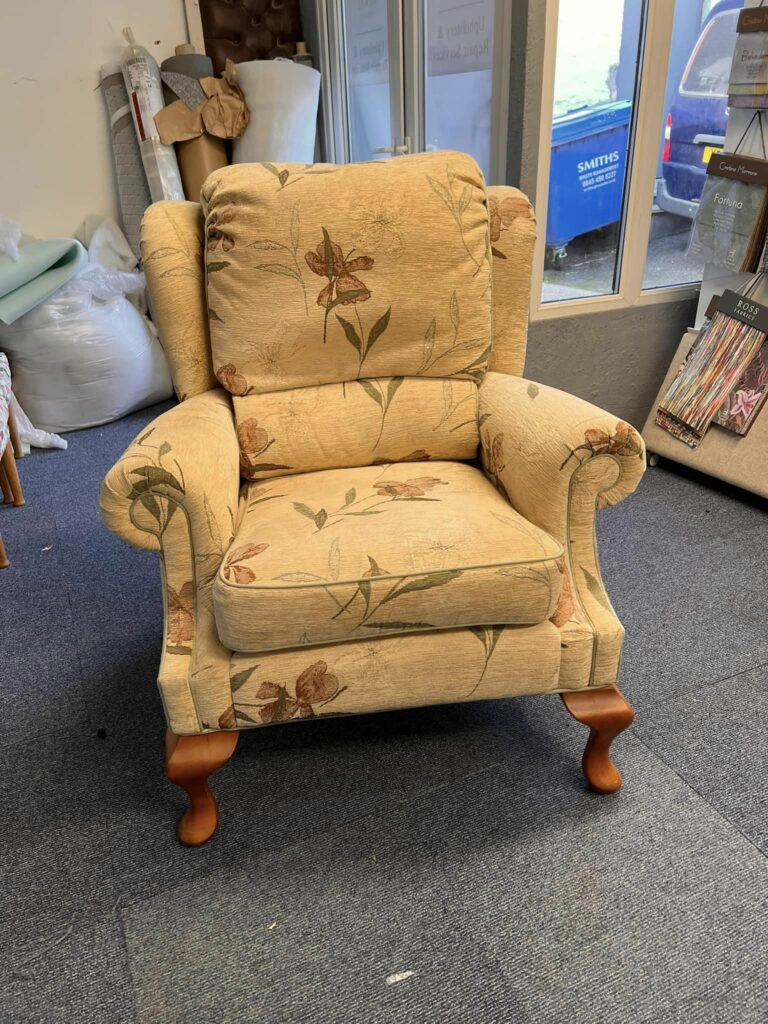
Also, think about the colour of the frame. Most antique pieces were made from darker woods so choosing a darker fabric or one with a heavy pattern will likely match far better. Then again, for something fresher, you might choose a floral fabric which will also compliment the wood.
What’s more, since the wooden frames of these pieces are often incredibly robust, the last thing you want to do is use a super lightweight fabric. Opting for something thick and heavy is often the best solution here.
What Fillings Are Best For Reupholstering Antique Chairs And Sofa?
Another thing that you need to think about when reupholstering antique furniture is the type of filling you use.
Back in the day, things like animal hair, batting, and even hay were used and, if you want to retain the historical value of the piece then it’s a good idea to stick with these types of filling. However, it is possible to use more modern fillings like foam and synthetic fibres but this again, will devalue the furniture.
Animal hair is a common choice and is often taken from the tail or mane of animals like horses. You’ll also find feather and down to be incredibly popular in the antique furniture reupholstery market but what you need to keep in mind about both of these stuffings is that they’re not suitable for people with allergies. However, they offer a beautifully soft and comfortable seat and, when properly maintained, can last a decent amount of time.
Alternatively, you might choose batting which is made from either cotton or wool. When reupholstering, this batting is typically applied over the top of the foam so you get a filling that’s both comfortable and will retain its shape. You can choose the thickness of your batting depending on your needs.
In days gone by, they would have used things like hay, straw and even moss to fill their sofa cushions. That sounds a little weird by today’s standards but it was so common years ago. Straw was commonly used as a base layer which would then be covered by moss or hay.
More expensive pieces were known to have a higher hay ratio and less straw as this was considered to be more luxurious.
While you might not think it, coil springs have been used since the 19th century in furniture. So, if you want these added then it shouldn’t detract from the historical value of the piece. Plus, they offer comfort and durability in equal measure.
Can Deway Help To Reupholster My Antique Couch?
Deway is at the forefront of antique furniture upholstery and we have a catalogue of projects that we’re super proud of. We strive to retain the historical value and beauty of antique pieces while restoring them to a usable and attractive state.
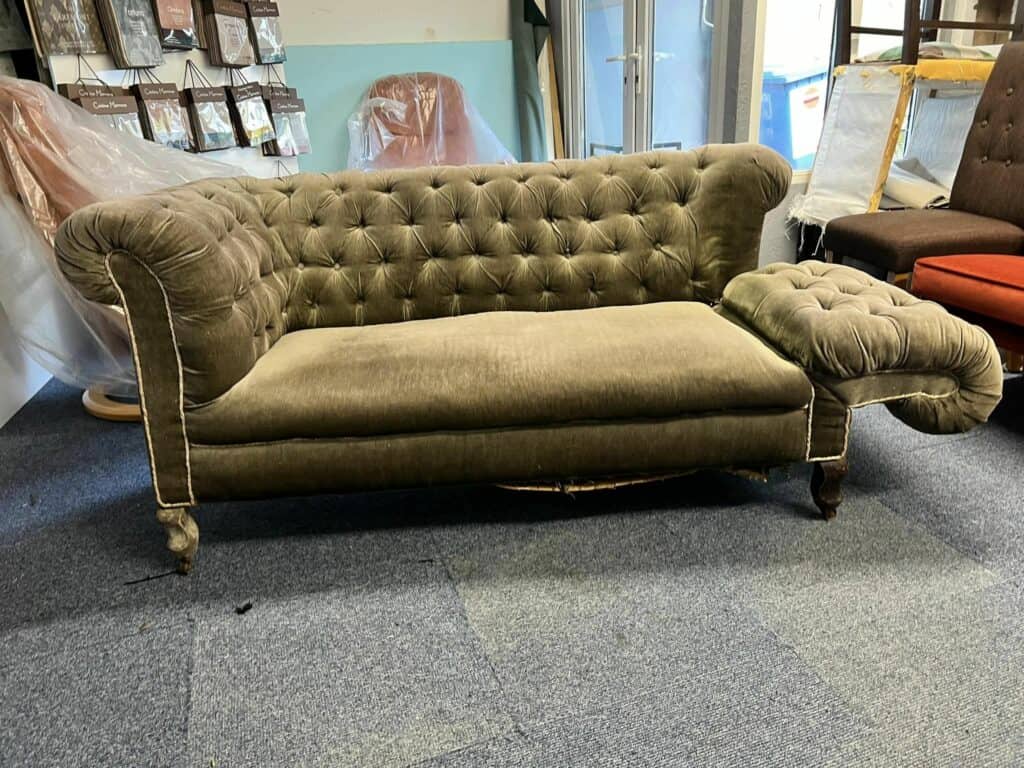
Just take a look at this sofa which we believe to be from around the year 1900 and which was as good as falling apart. But with some TLC and expert skill, we were able to breathe new life into this piece with a velvet fabric and horsehair stuffing.
We also restored this beautiful 1940s sofa in a stunning red ribbed velvet fabric, giving it a whole new look and feel for the owners.
Deway takes great pride in caring for antique furniture and always aims to retain as much of the original character and materials as possible. If you have a piece that requires restoration, please speak to us today; we’d be more than happy to help.